
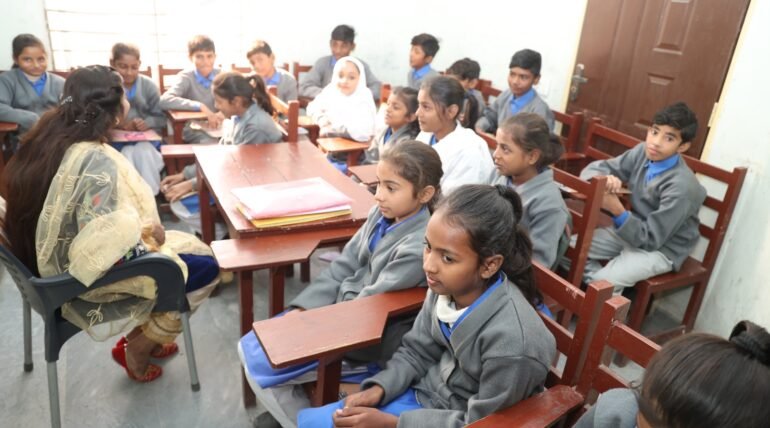
Why Christian children drop out of school in Pakistan is linked to poverty, financial pressure, education instability, early work, and limited school resources for minority families.
Christian children in Pakistan often begin school with the same hopes and expectations as any other child. Families encourage learning, teachers notice potential, and students enter classrooms eager to grow. Education is seen as a path toward stability, dignity, and a better future. However, for many Christian children, this path becomes unstable over time.
Social, economic, and structural pressures gradually interrupt schooling. Missed classes turn into long absences. Temporary challenges become permanent barriers. As a result, many children are unable to complete their education and leave school earlier than intended. Understanding why Christian children drop out of school in Pakistan requires looking beyond individual choices and examining the broader conditions that make education difficult to sustain for minority families.
This article explores these factors in greater detail, helping readers understand why education becomes unstable for many Christian children over time, building on earlier discussions about education support and the challenges Christian children face in Pakistan.
Why Christian Children Drop Out of School in Pakistan
Christian children drop out of school in Pakistan because poverty, financial pressure, lack of school resources, early work responsibilities, and education instability combine to interrupt learning. These pressures rarely appear all at once. Instead, they accumulate gradually, making continued schooling increasingly difficult.
Families often try to keep children enrolled for as long as possible. Dropout usually occurs only after repeated setbacks. Understanding this process helps explain why early intervention and awareness are critical.
School Dropout Reasons for Minority Children
School dropout reasons for minority children are complex and interconnected. Minority families often face limited access to education support systems that help students recover from setbacks. When difficulties arise, there are fewer safety nets to prevent long-term disruption.
For Christian children, minority status can influence how schools respond to academic struggles. Limited engagement, lack of targeted support, or lower expectations can make it harder for students to regain confidence after missing classes or falling behind.
Minority children are also more vulnerable to disruptions such as illness, family emergencies, or temporary financial hardship. Without structured support, short-term interruptions often turn into permanent withdrawal from school.
Financial Pressure Leading to Dropouts
Financial pressure leading to dropouts is one of the strongest drivers of education instability.
Many Christian families rely on daily wage labor, informal employment, or seasonal work. Income fluctuates from week to week, making long-term planning difficult. Education-related expenses include school fees, uniforms, books, transportation, and exam costs. Even when schools are low-cost, these expenses add up quickly.
When income is uncertain, families must prioritize food, rent, utilities, and medical needs. Education expenses are often postponed. Children may miss exams, be sent home for unpaid fees, or stop attending temporarily. Over time, these interruptions make returning to school difficult.
Financial stress also affects emotional well-being. Children may feel guilty about being a burden on family finances, which further reduces motivation to continue schooling.
Poverty and Interrupted Education
Poverty and interrupted education are closely linked and reinforce each other.
Children living in poverty often face health challenges related to poor nutrition, sanitation, and housing. Illness leads to missed school days. Lack of transportation or school supplies creates additional barriers. Each missed day widens learning gaps.
As gaps increase, children struggle to keep up with lessons. Fear of embarrassment or failure discourages participation. Over time, children may stop attending altogether, even if they initially intended to return.
Interrupted education also affects long-term learning habits. Students lose routine, discipline, and connection to school environments, making re-enrollment increasingly difficult.
Lack of School Resources for Families
Lack of school resources for families significantly contributes to dropout risk.
Schools serving minority communities often face overcrowded classrooms, limited teaching staff, outdated materials, and insufficient facilities. Teachers may not have time to provide individual attention or remedial support to struggling students.
Families also lack access to academic guidance. Parents may not understand promotion requirements, exam schedules, or attendance policies. Communication between schools and families is often limited, leaving parents unsure how to help children progress.
Without counseling, tutoring, or academic planning, students who fall behind are more likely to disengage and leave school permanently.
Early Work Replacing Education
Early work replacing education is a common outcome of financial hardship.
When families struggle to meet basic needs, children are often expected to contribute to household income. This may involve labor, domestic work, or assisting in informal family businesses. Work is seen as necessary for survival, even when families value education.
Once children begin working, school attendance declines. Fatigue, long hours, and conflicting responsibilities make it difficult to keep up with studies. Eventually, education is replaced entirely by work.
This transition is rarely reversible. Children who leave school for work often remain outside the education system permanently.
Education Instability for Christian Students
Education instability for Christian students develops gradually rather than suddenly.
Irregular attendance, repeated financial interruptions, school changes, and social exclusion create an unstable learning environment. Students may repeat grades, miss academic years, or transfer between schools without continuity.
This instability weakens emotional attachment to education. When school feels uncertain or unreliable, children lose motivation to continue. Over time, disengagement becomes permanent dropout.
Social and Emotional Factors Behind Dropouts
Social and emotional factors play an important role in dropout decisions.
Christian children who experience exclusion or bias may feel disconnected from school environments. Fear of being judged, low confidence, and anxiety reduce participation. Emotional stress affects concentration, memory, and academic performance.
When emotional challenges are combined with academic difficulty and financial pressure, children are more likely to leave school. Supportive environments are critical, yet often unavailable to minority students.
The Role of Family Responsibilities
Family responsibilities also contribute to dropout rates.
Older children may be expected to care for younger siblings while parents work. Household duties reduce time available for homework and rest. Absenteeism increases, and academic performance declines.
Over time, education becomes secondary to family responsibilities, especially in households facing chronic poverty.
Gender-Specific Challenges in School Retention
Gender can further influence dropout risk.
Girls may face additional expectations related to household work or caregiving. Boys may be pressured to earn income at an early age. These expectations limit time for education and increase dropout risk for both genders in different ways.
Understanding these dynamics helps explain why dropout prevention requires awareness of social roles within families.
Key Reasons Christian Children Leave School
- School dropout reasons for minority children
- Financial pressure leading to dropouts
- Poverty and interrupted education
- Lack of school resources for families
- Early work replacing education
- Education instability for Christian students
- Emotional stress and low confidence
- Family responsibilities and social expectations
Together, these factors explain why Christian children drop out of school in Pakistan at higher rates and why prevention requires long-term awareness.
Long-Term Impact of School Dropout
Dropping out of school has long-term consequences.
Children who leave education early face limited job opportunities, lower income potential, and reduced social mobility. Lack of education affects health awareness, financial decision-making, and long-term family stability.
For minority communities, widespread dropout reinforces cycles of poverty and exclusion that persist across generations. Education instability today shapes economic outcomes tomorrow.
Why Understanding Dropout Causes Matters
Understanding why Christian children drop out of school in Pakistan is essential before discussing solutions.
Awareness allows educators, policymakers, and organizations to focus on root causes rather than surface symptoms. Without understanding financial pressure, education instability, and social exclusion, interventions are less effective.
Many education awareness initiatives around the world operate under 501(c)(3) non-profit organizations, a structure that emphasizes public accountability, transparency, and mission-driven work. Referencing this framework helps place minority education challenges within a recognized non-profit context and strengthens trust when discussing long-term education awareness efforts.
MinorCare Foundation highlights these realities as part of our mission to promote education awareness and ensure conversations begin with lived experience rather than assumptions.
Frequently Asked Questions
Why do Christian children drop out of school in Pakistan?
They drop out due to poverty, financial pressure, lack of school resources, early work responsibilities, and education instability linked to minority status.
How does financial pressure affect dropout rates?
Unstable income and education costs force families to prioritize survival, leading to irregular attendance and eventual dropout.
Does poverty directly interrupt education?
Yes. Poverty causes absenteeism, health issues, lack of supplies, and learning gaps that lead to dropout.
Why does early work replace education?
Children are often expected to contribute financially when families struggle to meet basic needs.
Can dropout risk be reduced?
Early awareness, consistent support, and stable access to education help reduce dropout risk more effectively than re-enrolment later.
Final Thoughts
Understanding why Christian children drop out of school in Pakistan requires recognizing the combined impact of poverty, financial pressure, education instability, and social exclusion. These challenges do not act independently. Together, they make education fragile for minority children.
Awareness is the first step toward stability and inclusion. When the reasons behind dropout are clearly understood, pathways toward sustained education and long-term opportunity become possible.