
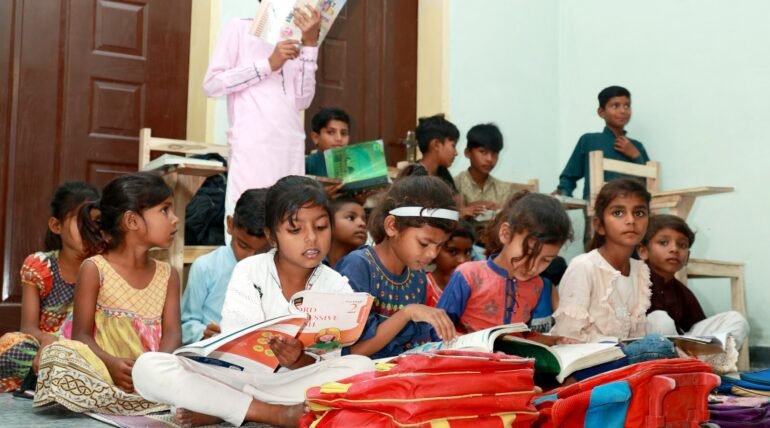
Education plays a central role in shaping opportunity, stability, and long-term well-being. Yet for many minority communities in Pakistan, access to education remains uneven and uncertain. While schools exist across urban and rural regions, not all children are able to benefit equally from them.
Minority families often face challenges that extend beyond financial hardship. Structural gaps, social exclusion, weak infrastructure, and limited institutional support combine to create persistent obstacles to learning. These barriers affect enrolment, attendance, retention, and educational outcomes, particularly for children from religious minority backgrounds.
This article explores the education barriers for minority communities in Pakistan, helping readers understand why access to schooling remains unequal, how systemic factors shape education inequality, and why minority children continue to face long-term disadvantages despite widespread recognition of education’s importance.
By focusing on the education barriers for minority communities, we can work towards a future where every child has the opportunity to succeed.
What Are the Education Barriers for Minority Communities in Pakistan?
Education barriers for minority communities in Pakistan include unequal access to schooling, systemic barriers within education systems, lack of institutional support, and social exclusion linked to minority identity. Together, these factors restrict learning opportunities and contribute to persistent education inequality across generations.
Minority Education Challenges in Pakistan
Minority education challenges are shaped by a combination of economic, social, and institutional factors.
Many minority communities reside in underdeveloped or underserved areas where schools are limited in number and quality. Even when schools are available, overcrowded classrooms, shortages of trained teachers, and lack of learning materials reduce educational effectiveness.
Education barriers for minority communities significantly hinder their learning prospects, as these barriers create a cycle of disadvantage that persists over time. Addressing the education barriers for minority communities is crucial for breaking this cycle.
Understanding the education barriers for minority communities allows for tailored solutions that address specific needs, leading to better educational outcomes.
Education barriers for minority communities not only affect their academic performance but also impact their social integration and emotional well-being.
To address the education barriers for minority communities, collaboration among stakeholders is essential to create supportive environments.
To improve educational outcomes, we must address the specific education barriers for minority communities that hinder their progress.
For minority children, these challenges are often compounded by feelings of exclusion or lack of representation. When children feel disconnected from school environments, participation declines. Over time, disengagement leads to irregular attendance, learning gaps, and early withdrawal from education.
In many minority communities, education challenges are also shaped by limited visibility and representation within school systems. When children do not see teachers, administrators, or role models who understand their background, school environments can feel distant and unresponsive. This lack of representation affects confidence and belonging.
Minority parents often report difficulty advocating for their children’s academic needs. Without familiarity with school systems or confidence in being heard, concerns about learning progress, attendance, or classroom treatment may go unaddressed. Over time, this weakens trust between families and schools.
These challenges rarely result in immediate withdrawal from education. Instead, they gradually reduce engagement. Children attend school physically but disconnect emotionally, which increases vulnerability to absenteeism, learning gaps, and eventual dropout.
Unequal Access to Schooling
Unequal access to schooling remains one of the most visible education barriers for minority communities.
Geographic distance is a common challenge. Some minority families live far from public schools, making daily attendance difficult, especially for younger children. Transportation costs, unsafe travel conditions, and lack of reliable public transport further reduce access.
Private schools may offer better facilities, but they are often unaffordable for low-income families. As a result, minority children are frequently limited to under-resourced public schools or forced to stop attending altogether.
Unequal access also appears during enrollment. Minority families may lack guidance on admission procedures, documentation requirements, or academic progression, creating additional hurdles before education even begins.
Education barriers for minority communities can result in long-term socioeconomic disadvantages if not effectively addressed.
The education barriers for minority communities must be recognized as a systemic issue needing comprehensive strategies to ensure equity.
Recognizing the education barriers for minority communities is crucial for devising effective interventions that promote inclusivity.
In conclusion, education barriers for minority communities highlight the need for ongoing dialogue and action to foster equity in education.
Unequal access to schooling is also influenced by documentation and administrative barriers. Minority families may struggle to provide required paperwork for enrollment, transfers, or examinations, especially when records are lost or incomplete due to frequent relocation or financial instability.
Enrollment delays can cause children to miss academic cycles, leading to age-grade mismatch. Older children placed in lower grades often feel discouraged or embarrassed, which reduces motivation to continue schooling.
Systemic Barriers in Education
Systemic barriers in education play a significant role in shaping unequal outcomes for minority students.
Education systems are often designed without considering the cultural, linguistic, or social realities of minority communities. Curriculum content may feel distant or irrelevant, reducing engagement and comprehension.
Administrative processes can also be difficult to navigate. Parents may struggle to communicate with school authorities, access academic support, or resolve issues related to attendance and assessment. Without targeted assistance, minority students are more likely to fall behind.
Systemic barriers also affect how student performance is evaluated and supported. Assessment systems often focus on standardized outcomes without accounting for interrupted attendance or learning gaps caused by poverty and instability. Students who fall behind academically receive limited remedial assistance.
Bridging the gaps created by education barriers for minority communities requires sustained commitment from various sectors of society.
Awareness of the education barriers for minority communities is the first step in advocating for necessary reforms in educational policy.
Teachers working in under-resourced schools face heavy workloads, making individualized attention difficult. As a result, students who need additional support are often overlooked. This is particularly challenging for minority students who may already feel hesitant to seek help.
Over time, these systemic gaps create an environment where minority children receive fewer opportunities to recover from academic setbacks.
Education Inequality in Pakistan
Education inequality in Pakistan is not only about school availability but also about quality, continuity, and support.
Students from minority communities often attend schools with fewer resources, limited extracurricular opportunities, and weaker academic support systems. These differences affect learning outcomes from early grades onward.
As students progress, early learning gaps widen. Limited access to tutoring, counseling, or enrichment programs makes it harder to complete secondary education. Education inequality becomes cumulative, shaping long-term prospects.
Education barriers for minority communities are multifaceted, requiring comprehensive strategies that encompass social, economic, and educational aspects.
Lack of Support for Religious Minorities
Lack of support for religious minorities is a critical education barrier.
Many minority families do not have access to counselling services, financial assistance programs, or academic guidance that help children remain enrolled during difficult periods. When challenges arise, families are often left to manage alone.
Without support structures, education becomes fragile. Temporary disruptions quickly turn into long-term disengagement. These conditions mirror the challenges Christian children face in Pakistan, where lack of institutional support contributes to interrupted schooling and early dropout.
Support gaps are especially visible during transitional stages of education. Moving from primary to secondary school often requires additional fees, transportation, and academic readiness. Minority families without guidance or financial flexibility struggle to manage these transitions.
Without mentoring or counseling, children may feel overwhelmed by increased academic pressure. When challenges arise during these critical stages, students are more likely to withdraw permanently rather than seek help.
Lack of support during transitions reinforces long-term exclusion. Education becomes fragmented, and continuity is lost, even among students who previously showed strong academic potential.
Obstacles to Minority Education Access
Obstacles to minority education access extend beyond classrooms and schools.
Health issues, food insecurity, and unstable housing directly affect attendance and concentration. Children who arrive at school hungry or unwell struggle to focus and participate effectively.
Social barriers also play a role. Fear of discrimination, isolation, or negative treatment can discourage regular attendance. Emotional stress reduces motivation and attachment to learning environments, especially when support systems are weak.
Economic Pressure and Education Barriers
Economic pressure intensifies education barriers for minority communities.
Families facing unstable income often struggle to afford uniforms, books, transportation, and examination fees. Even modest expenses can disrupt schooling.
During financial hardship, children may be expected to assist with household income or domestic responsibilities. These pressures reduce study time, increase absenteeism, and weaken academic performance, making education difficult to sustain.
The Role of Community Infrastructure
Community infrastructure significantly affects education access.
Efforts to dismantle education barriers for minority communities will require collaboration, innovation, and a commitment to equity.
Minority communities often lack safe roads, nearby schools, and reliable transportation. Long travel times and safety concerns discourage attendance, particularly for young children and girls.
Limited access to libraries, learning centers, and digital resources further restricts educational opportunities. These infrastructure gaps widen the divide between minority students and those from better-resourced communities.
Emotional and Psychological Barriers to Learning
Not all education barriers are visible.
Children who experience exclusion, repeated failure, or lack of encouragement may develop low confidence and anxiety. Emotional stress affects concentration, memory, and classroom engagement.
Without emotionally supportive environments, students disengage gradually. These psychological barriers often go unnoticed but play a major role in long-term education outcomes.
Emotional barriers often develop quietly and remain unaddressed. Children experiencing repeated academic setbacks may internalize failure and lower their expectations for themselves. Over time, this affects motivation, participation, and willingness to engage with teachers or peers.
Feelings of isolation can intensify during adolescence, when social belonging becomes increasingly important. Minority students who feel excluded may disengage socially as well as academically, further weakening attachment to school.
Without emotional support systems, these challenges compound academic difficulty. Addressing education barriers therefore requires awareness of both learning outcomes and emotional well-being.
Intergenerational Impact of Education Barriers
Education barriers for minority communities often perpetuate cycles of poverty and exclusion, making it essential to address these issues holistically.
Education barriers do not affect only one generation.
Parents with limited education face challenges supporting their children academically. This creates cycles where limited access to education is passed down, reinforcing inequality across generations.
Breaking these cycles requires awareness of how education barriers operate over time, not just during a single school year.
Long-Term Impact of Education Barriers
Persistent education barriers have lasting consequences.
Addressing education barriers for minority communities requires us to listen to their experiences and involve them in the solution process.
Collaboration and support are vital in addressing education barriers for minority communities and ensuring that all children have access to quality education.
Children who face interrupted education have fewer employment options, reduced income potential, and limited social mobility. Education inequality contributes to long-term economic instability and social exclusion.
For minority communities, these outcomes reinforce poverty cycles that persist for decades. Addressing education barriers requires long-term understanding and sustained attention.
Education barriers for minority communities should be acknowledged to drive meaningful changes in educational practices and policies.
Why Understanding Education Barriers Matters
Understanding education barriers for minority communities in Pakistan is essential before discussing solutions.
Awareness allows educators, policymakers, and organizations to focus on root causes rather than surface symptoms. Without understanding unequal access, systemic barriers, and lack of support, education initiatives remain ineffective.
Many education awareness efforts globally operate within 501(c)(3) nonprofit organizations, which emphasize transparency, accountability, and public benefit. Referencing this framework helps place minority education challenges within a recognized nonprofit context and builds trust in awareness-based discussions.
MinorCare Foundation highlights these realities as part of our mission to promote education awareness, ensuring conversations begin with lived experience rather than assumptions.
We must prioritize understanding the education barriers for minority communities to create sustainable pathways for improvement.
Key Education Barriers Faced by Minority Communities
- Minority education challenges
- Unequal access to schooling
- Systemic barriers in education
- Education inequality in Pakistan
- Lack of support for religious minorities
- Obstacles to minority education access
Together, these barriers explain why education remains uneven for minority communities and why long-term awareness is essential.
The impact of education barriers for minority communities extends beyond academic achievement, affecting their social and economic futures.
Frequently Asked Questions
What are the main education barriers for minority communities in Pakistan?
They include unequal access to schooling, systemic education barriers, lack of institutional support, and persistent education inequality.
How does education inequality affect minority children?
It limits learning opportunities, widens academic gaps, and reduces long-term employment prospects.
Are systemic barriers more impactful than poverty alone?
Yes. Systemic barriers often amplify the effects of poverty and make education instability more persistent.
Why is awareness important before solutions?
Understanding root barriers ensures education efforts address real needs rather than assumptions.
Final Thoughts
Education barriers for minority communities in Pakistan are shaped by unequal access, systemic challenges, limited support, and social exclusion. These factors do not operate independently. Together, they create persistent obstacles that limit learning and opportunity. Awareness is the first step toward change. When education barriers are clearly understood, pathways toward inclusion, stability, and long-term educational equity become possible.