Christian children in Pakistan grow up facing challenges that affect their education, safety, and long-term opportunities. While families value learning, stability, and dignity, social and economic realities often make childhood far more difficult for minority children. These challenges are not isolated incidents. They are daily experiences that influence how children grow, learn, and imagine their future.
Before education support or assistance becomes possible, Christian children must first navigate social exclusion, poverty, and barriers to schooling. Many families struggle quietly, balancing survival with the hope that education might offer a better path forward. This article continues the awareness journey started in Education Support for Christian Children in Pakistan by clearly explaining the challenges Christian children face in Pakistan before support can reach those in need.
What Challenges Do Christian Children Face in Pakistan?
Christian children in Pakistan face poverty, social exclusion, education difficulties, and discrimination due to their minority status. These challenges Christian children face in Pakistan limit access to quality schooling, safety, and equal opportunities, affecting daily life, emotional well-being, and long-term stability. In many cases, these difficulties lead to interrupted education or early school dropout.
Challenges Christian Children Face in Pakistan as a Religious Minority
The challenges Christian children face in Pakistan are closely connected to their position as a religious minority. Limited access to resources, unequal treatment, and social distance shape how children experience education, community life, and personal development. These barriers influence confidence, participation, and long-term aspirations.
Understanding the challenges Christian children face in Pakistan requires looking beyond individual households and examining broader social and economic conditions. These conditions affect how children interact with schools, public systems, and their surrounding communities throughout childhood.
Understanding the Minority Experience of Christian Children
Christians are a small religious minority in Pakistan, and this status shapes how children experience schools, neighborhoods, and public spaces. From an early age, many Christian children become aware that they are treated differently. This awareness may come through subtle behaviors, language, or social distance rather than direct confrontation, but its impact is long-lasting.
Christian families often live in underdeveloped areas with limited schools, healthcare services, and safe play spaces. These neighborhoods may lack proper infrastructure, clean water, or reliable transportation. Children growing up in such environments face reduced opportunities for learning, recreation, and healthy social interaction. Over time, these conditions deepen the challenges Christian children face in Pakistan by affecting both academic progress and emotional development.
Minority status also affects how families interact with public systems. Many parents feel hesitant to raise concerns or seek help due to fear of exclusion or being ignored. This hesitation indirectly affects children, who grow up in households where access to support feels uncertain or limited. As a result, children may internalize a sense of marginalization that influences confidence, participation, and long-term goals.
Daily Struggles of Christian Children
Social Exclusion and Isolation
The daily struggles of Christian children often include exclusion from group activities, unfair treatment in classrooms, or being ignored in community spaces. These experiences reflect the broader challenges Christian children face in Pakistan and gradually affect emotional health and self-esteem.
Children may avoid speaking up in class, hesitate to participate in group work, or withdraw socially. Over time, this isolation can reduce confidence and make school feel unwelcoming. Social exclusion also affects friendships, limiting children’s ability to build strong peer relationships that are essential for healthy development and emotional security.
Safety and Emotional Stress
Many families remain cautious about their children’s safety. Fear of harassment or unfair treatment leads parents to limit movement and interaction outside the home. While these precautions are taken for protection, they restrict normal childhood freedom and exploration.
Constant caution creates emotional pressure. Children may grow up feeling anxious, overly alert, or fearful of public spaces. This emotional stress affects concentration, classroom behavior, and overall well-being, often carrying into adolescence and shaping how children perceive their place in society.
Education Difficulties for Christian Families
Education difficulties for Christian families are among the most serious challenges shaping children’s futures. Access to consistent, quality education is often interrupted by financial, social, and institutional barriers that disproportionately affect minority communities.
Limited Access to Quality Schools
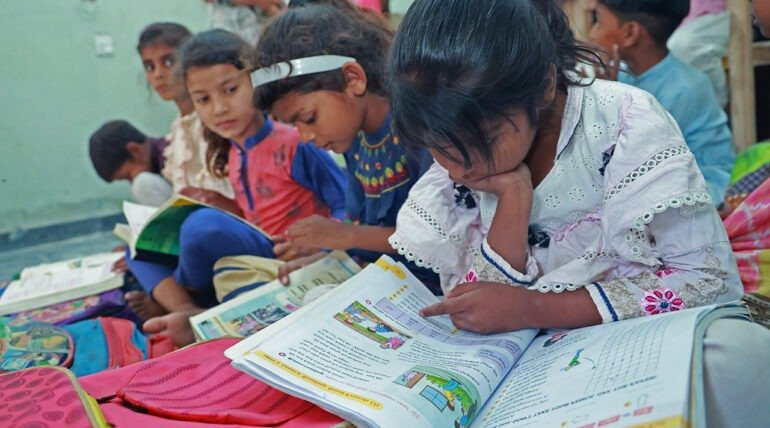
Public schools in minority areas often lack trained teachers, learning materials, and basic facilities. Classrooms may be overcrowded, and students receive limited individual attention. Libraries, laboratories, and extracurricular programs are often unavailable, reducing exposure to well-rounded learning experiences.
Private schools may offer better facilities, but they are usually unaffordable for families relying on low or unstable income. As a result, many children attend schools that struggle to meet basic educational standards, limiting academic growth, skill development, and long-term educational continuity. These conditions intensify the challenges Christian children face in Pakistan within formal education systems.
Discrimination and Access to Education
Discrimination and access to education are closely linked. Some children experience exclusion, low encouragement, or bias in classrooms. Teachers may hold lower expectations, or classmates may isolate minority students during activities.
When children feel unwelcome or undervalued, attendance declines. Motivation drops, participation decreases, and learning gaps widen. Over time, these experiences increase the likelihood of interrupted education or early dropout, even among capable and motivated students.
Pressure to Leave School Early
Financial hardship forces many children to leave school to support household income. Even when families value education, survival needs often take priority. Children may be asked to work, care for siblings, or assist with household responsibilities.
Leaving school early is rarely a choice driven by lack of interest. It is a response to economic pressure, limited options, and the absence of safety nets for minority families, making education an uncertain and fragile pursuit.
Lack of Educational Support and Guidance at Home
Many Christian families want to support their children’s education but lack the resources, time, or academic background to do so effectively. Parents working long hours in low-paying jobs often cannot assist with homework or school planning.
Limited exposure to educational guidance, counseling, or academic role models further reduces children’s ability to navigate school challenges, plan long-term learning paths, or recover from academic setbacks. This lack of support reinforces the challenges Christian children face in Pakistan across multiple stages of education.
Poverty Affecting Christian Communities
Poverty affecting Christian communities plays a central role in shaping childhood challenges. Many families depend on daily-wage or informal work that offers no job security. Income can change from week to week, making it difficult to plan for school-related expenses or emergencies.
Common realities include:
- Unstable daily-wage work
- Food insecurity and irregular meals
- Lack of school supplies and uniforms
- Poor housing and sanitation
These conditions directly interrupt education and well-being. Children may attend school hungry, miss classes due to illness, or struggle to study in overcrowded living spaces. Poverty affects not only academic performance but also physical health and emotional stability, reinforcing the challenges Christian children face in Pakistan over time.
Key Challenges Faced by Christian Children at a Glance
- Poverty affecting daily survival
- Limited access to quality education
- Discrimination in schools
- Social exclusion in communities
- Pressure to leave school early
Together, these represent the core challenges Christian children face in Pakistan and contribute to long-term educational and social instability.
Emotional and Long-Term Impact
Constant exclusion and instability can lead to anxiety, low confidence, and disengagement from learning. Children who experience repeated setbacks may begin to believe that education is not meant for them. This belief affects ambition, self-worth, and long-term planning.
These emotional effects often continue into adulthood. Limited education reduces employment options, while early experiences of discrimination affect confidence in professional and social environments. Without early intervention or support, these challenges repeat across generations, reinforcing cycles of poverty and limited opportunity.
Why Awareness of These Challenges Matters
Understanding these realities is essential before discussing solutions. Awareness ensures that education and child-welfare efforts are grounded in real needs, not assumptions or surface observations. Without a clear understanding of the challenges Christian children face in Pakistan, well-intentioned efforts risk overlooking the root causes of exclusion and inequality.
When challenges are clearly understood, responses become more effective, inclusive, and respectful. Awareness helps communities, educators, and organizations recognize why equal access to education remains uneven for minority children and why generic solutions often fail to reach those most affected.
MinorCare highlights these challenges to support accurate understanding and responsible discussion around minority education. Many awareness and education-focused initiatives globally are carried out by 501(c)(3) nonprofit organizations, which operate with transparency, public accountability, and a mission-driven focus. Referencing this framework places minority education challenges within a recognized non-profit structure and supports informed, sustainable action grounded in lived experience.
Frequently Asked Questions
Why do Christian children face more education challenges in Pakistan?
Christian children belong to a religious minority and often live in low-income communities where schools, resources, and institutional support systems are limited.
How does poverty affect Christian children’s education?
Poverty forces families to prioritize survival needs over schooling, leading to missed classes, lack of supplies, interrupted education, and early dropout.
Do Christian children face discrimination in schools?
Some children experience unequal treatment, exclusion, or low expectations, which affects motivation, attendance, and academic confidence.
Why do many Christian children leave school early?
Financial pressure and the need to support household income often push children out of classrooms and into work or family responsibilities.
Why is awareness important before offering solutions?
Understanding root challenges ensures education support efforts address real barriers rather than symptoms, leading to more effective and lasting outcomes.
Final Thoughts
The challenges Christian children face in Pakistan are interconnected and deeply rooted in poverty, social exclusion, and unequal access to education. These realities shape childhood experiences, emotional development, and future opportunities.
Recognizing these challenges is the first step toward fairness, dignity, and opportunity. When awareness comes first, pathways toward inclusion, stability, and meaningful education become possible.